Why Bend Radius is Important for Hydraulic Hose Installation
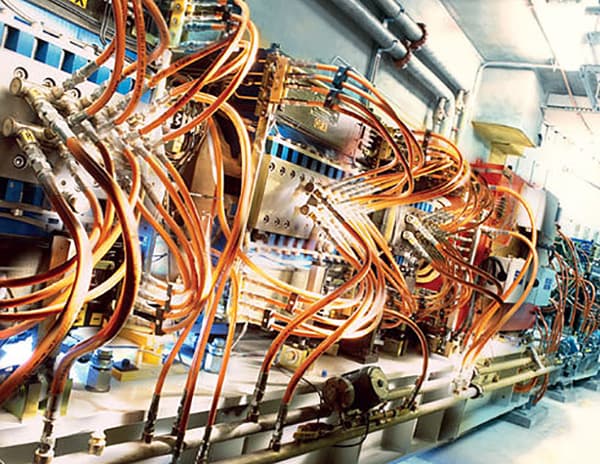
The hydraulic system can be stationary or have moving parts like cylinders, actuators, racks, and pinion drives that may extend or retract hoses. Additionally, hoses may need to be bent to fit with various components in hydraulic hose installations, like pumps, coolers, and filters.
Observe caution during installation as it may lead to drastic consequences if attention isn’t paid to the minimum bend radius when designing hydraulic hose installations. Here, we look at what a minimum bend radius is and why it is important in many hydraulic systems.
What is Minimum Bend Radius?
The flexibility of a hydraulic hose depends on the number of reinforcement layers it has and the thickness of the outer cover. Manufacturers specify the minimum bend radius for their hoses which is the minimum radius a hydraulic hose can be looped into without sustaining damage to the inner layers.
To ensure you follow the manufacturer’s guidelines, measure the bend radius of every arc in a hydraulic hose assembly when it is fitted onto your hydraulic system. As per the formula = sφ, you use the length of the arc (s) and the angle the loop sweeps (φ) to find the radius. If it is lower than the minimum bend radius, you’ll need to make adjustments to the hose assembly.
Common Misconceptions
Rookie engineers often make the mistake of ordering higher bend radius hoses, thinking that the relationship between flexibility and bend radius is proportional. However, that’s not the case. The lower the bend radius, the smaller diameter a hose can be looped into.
Additionally, you cannot tell the bend radius of a hose just by looking at it because the property varies depending on the construction of the hose. It has more to do with how the layers of the hydraulic hose are constructed and how many of them are present. Braided mesh hoses are generally more flexible than spiral wound hoses with the same number of layers. That’s because the thinner wires in a mesh braid allow room for movement, increasing flexibility. Hence, two hydraulic hoses with the same thickness don't need to have the same minimum bend radius as well.
Why is Bend Radius Important to Consider?
Bend radius is often overlooked when hydraulic hose installations are being assembled. Time constraints, budget issues, and improper knowledge of hydraulic hoses are some of the factors that contribute to this oversight. However, this small oversight can lead to major safety issues if left unattended. Moreover, it may become costly to repair the damage sustained instead of investing in the correct hose in the first place.
Prevent Deformation
Force may be required to bend a hydraulic hose beyond its minimum bend radius to bend it more; however, this can cause the different materials inside the reinforcement layer to deform beyond a level of recovery. Typically, this layer is made of steel or polymer wire braids whose wires can damage and decrease the strength of the hydraulic hose. Over time, with intense flexing and jittering of the hose due to operating conditions, this layer can break and cause leakages in the pipe.
Prevent Inefficiencies
Hydraulic hose installations are part of a system where the pressure constantly changes as it moves from one component to another. This is due to the transfer of energy when changes in pressure drive useful work out of the system; hence, depending on the load on the system, more work will be required from its driving mechanism. If the pressure becomes too high and there’s an excessive bend in one of the hoses, it may cause a constriction in one of the lines requiring more work from the system and introducing inefficiencies.
Prevent Ruptures
Following from above, if the bend is excessive, the hose is weakened, and a constriction is present, hydraulic oil may build up to such excessive levels that the hydraulic hose may no longer sustain. This may lead to a rupture in the hydraulic hose and then becomes a safety issue.
Bottom Line
Considering the convoluted nature of hydraulic installations, it is understandable that some hose assemblies may get overlooked during installation. However, regular machine checks can identify which hose assembly is not up to code and can be replaced when a suitable part arrives. Till then, you might want to look into adjusting the length, fittings, and route of the hose assembly to mitigate the effects of exceeding the minimum bend radius. It will not only ensure safety for operators and maintenance teams but also improve the performance and longevity of the hydraulic installation.
Frequently Asked Questions
How does temperature affect the lifespan of hydraulic hoses?
Temperature significantly affects hydraulic hose performance and service life. Excessive heat can accelerate deterioration of the inner tube, reduce flexibility, and weaken hose materials.
Repeated temperature fluctuations cause expansion and contraction, increasing the risk of cracking, fatigue, and leaks.
Operating hydraulic hoses within their specified temperature ratings, maintaining proper fluid temperatures, and performing regular inspections can help extend their service life and prevent unexpected failures.
What is the difference between hydraulic hoses and coolant hoses?
Hydraulic hoses are typically designed to transport pressurized hydraulic fluids, including petroleum-based oils, while coolant hoses are engineered to handle water-based fluids, glycol mixtures, and other cooling solutions.
Their inner tube materials, reinforcement, and chemical compatibility requirements may differ. Some rubber compounds suitable for hydraulic oil can deteriorate when exposed to water-based coolants.
Selecting a hose specifically rated for the operating fluid, pressure, and temperature is essential for preventing leaks and premature failure.
What type of hose is best for glycol-based and water-based coolant systems?
Hoses constructed from chemically compatible materials, such as appropriately formulated EPDM or silicone, are commonly used in glycol-based and water-based cooling systems.
EPDM often provides good resistance to water and certain glycol mixtures, while silicone offers flexibility across a broad temperature range.
However, suitability depends on the specific coolant formulation, operating pressure, temperature, and hose construction. Always verify the manufacturer's chemical compatibility specifications before selecting a coolant hose.
Why are flexible hose connections important in data center liquid cooling systems?
Flexible hose connections accommodate misalignment, thermal expansion, and vibration between cooling headers and server racks.
Unlike rigid piping, flexible hoses allow movement without transferring excessive mechanical stress to fittings, valves, and connections.
They also simplify installation and maintenance in confined rack spaces. Properly designed flexible hose assemblies help reduce the risk of fatigue, leaks, and connection damage while supporting reliable coolant circulation in liquid-cooled data centers.
How do you prevent leaks and premature failure in hydraulic and coolant hoses?
Preventing hose failure begins with selecting materials compatible with the operating fluid, pressure, and temperature. Proper installation is equally important, including maintaining the manufacturer's minimum bend radius, avoiding twisting, supporting hose assemblies, and preventing abrasion against surrounding equipment.
Regular inspections can identify cracking, swelling, leaks, and damaged fittings before major failures occur. Using correctly rated fittings and maintaining stable operating temperatures also helps extend hose life.
How do you select the correct flexible hose for a data center rack drop?
Selecting a flexible hose for a data center rack drop requires evaluating coolant type, flow rate, operating pressure, temperature, hose length, and installation geometry.
The hose must accommodate movement between the cooling header and rack without exceeding its minimum bend radius or placing excessive stress on end fittings. Material compatibility with deionized water, glycol blends, or other approved coolants is essential.
Properly matched stainless steel fittings and secure hose support can further improve connection reliability and reduce maintenance requirements.
More questions: Hoses