Data Center Liquid Cooling with Titan Fittings
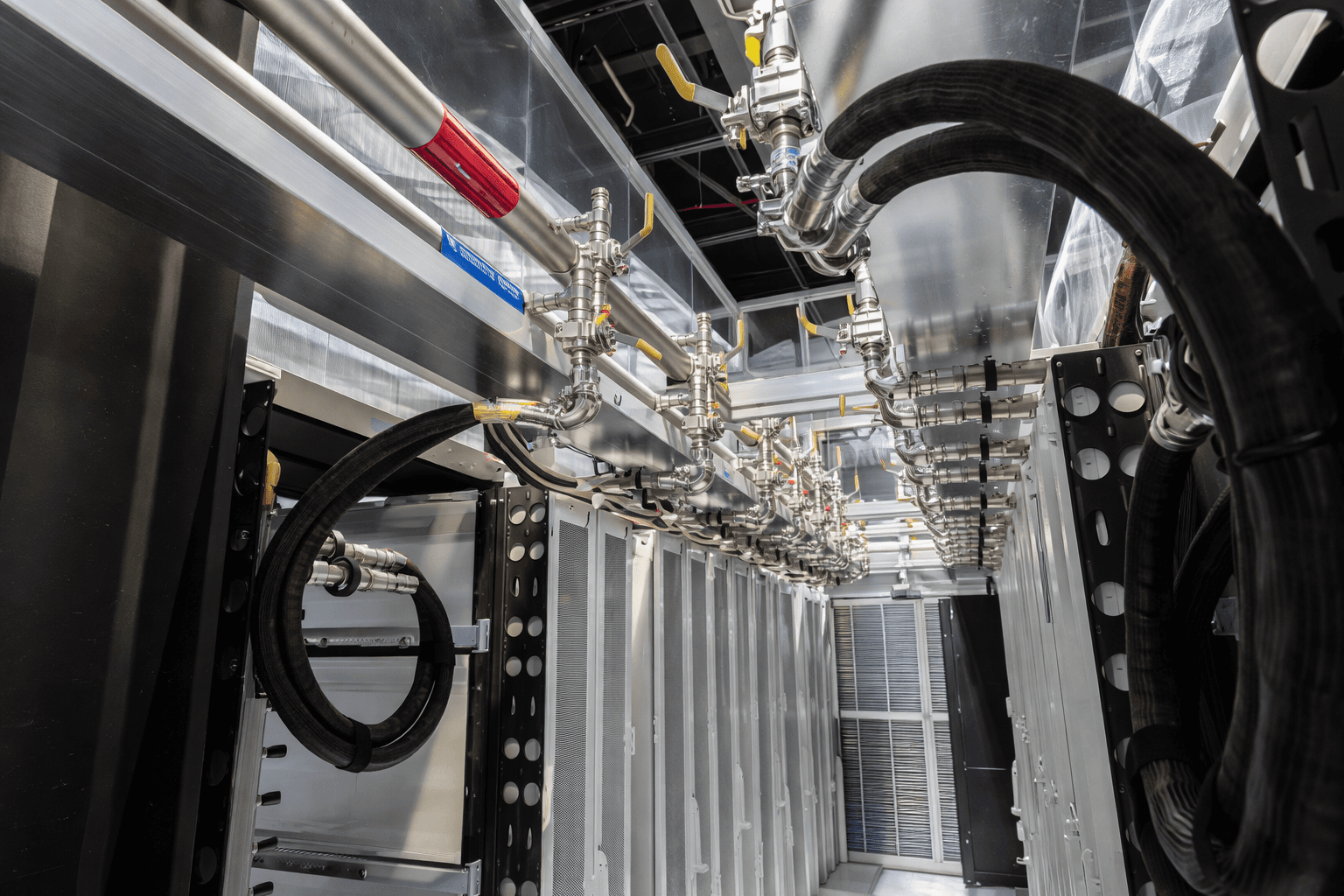
Data centers generate a lot of heat as they increasingly handle larger, larger volumes of compute. To handle the heat, liquid cooling systems work by running water or coolant over the face of a chip to remove excess heat and ensure peak performance. Let’s take a moment to review what components are available via TitanFittings.com which are available for purchase today.
Basic Setup
Modern hyperscaler data centers prefer liquid versus air cooling which requires specialized equipment needed to keep the fluid moving. A system will contain:
- Pipe / sanitary fittings to transport large volumes of fluid around the facility to the server racks,
- Valves for fluid control,
- Hoses to deliver the fluid within the rack, and
- Hose fittings to connect liquid systems to the servers.
- Fire suppression systems are out of the cooling loop and designed to quell fires in case of emergencies.
The exact configuration is designed by the data center architect, but broadly speaking, most facilities will use some configuration of the equipment above to move fluid within the facility.
How to select the right material for your pipes
Choosing the right material for your data center liquid cooling system is essential for reliability, corrosion resistance, and long-term performance.
Brass offers excellent machinability and is commonly used for valves, fittings, and quick-connect components.
304 stainless steel provides strong corrosion resistance and durability for many standard cooling applications.
316 stainless steel is ideal for more demanding environments by offering enhanced resistance to corrosion, particularly where chlorides or aggressive water chemistry may be present.
It’s important to ensure you are using the correct material to prevent leaks, contamination, or premature equipment failure.
Pipe Fittings Essentials
Fittings allow the cooling network to change direction, divide flow, and connect equipment of different sizes. Their design also influences pressure drop, maintenance access, and overall reliability. Common pipe fittings include:
- Elbows change piping direction.
- Tees and branch outlets distribute coolant to rows, racks, or cooling units.
- Reducers connect different pipe sizes.
- Couplings and unions join sections and simplify maintenance.
- Flanges have an external rim, lip, or collar used to connect pipe sections, valves, pumps, and other equipment. The joints are connected tightly with bolts and a sealing gasket
- Welded joints offer space for installers to weld joints together for permanent connections.
A sanitary tees are a common fitting in liquid cooling systems. Sanitary fittings use clamps to secure connections versus threads, which can hide debris. Data center architects tend to use sanitary fittings with flange ends because they minimize build-up in the long term by making short term maintenance easy.

Valves and Flow Control
Valves make it possible to isolate equipment, regulate coolant delivery, and protect the system during faults or maintenance. Proper valve selection also helps maintain balanced flow across the facility.
- Ball valves serve smaller branches and equipment connections.
- Butterfly valves suit larger headers.
- Control and balancing valves regulate flow.
- Check valves prevent reverse circulation.
- Pressure-relief valves protect against overpressure.
Ball valves are a good example of the kind of device you’ll find within the liquid cooling architecture.

Filtration and Monitoring
Clean coolant and accurate monitoring are essential because narrow cold-plate passages can be sensitive to debris, air, and unstable pressure. These components help prevent blockages and identify leaks or performance issues early.
- Strainers and filters remove debris.
- Quick disconnects simplify servicing.
- Flow, pressure, temperature, and leak sensors monitor performance.
Wye strainers are commonly used to provide filtration in the cooling loop preceding key sensitive points in the fluid system.
Conclusion
A well-designed piping system supports reliable cooling, safer maintenance, and future data center expansion.
Selecting the correct pipes, fittings, valves, and filters, helps to maintain efficient operations as heat rises in the system during periods of significant demand.