How Temperature Affects Hydraulic Hose Life
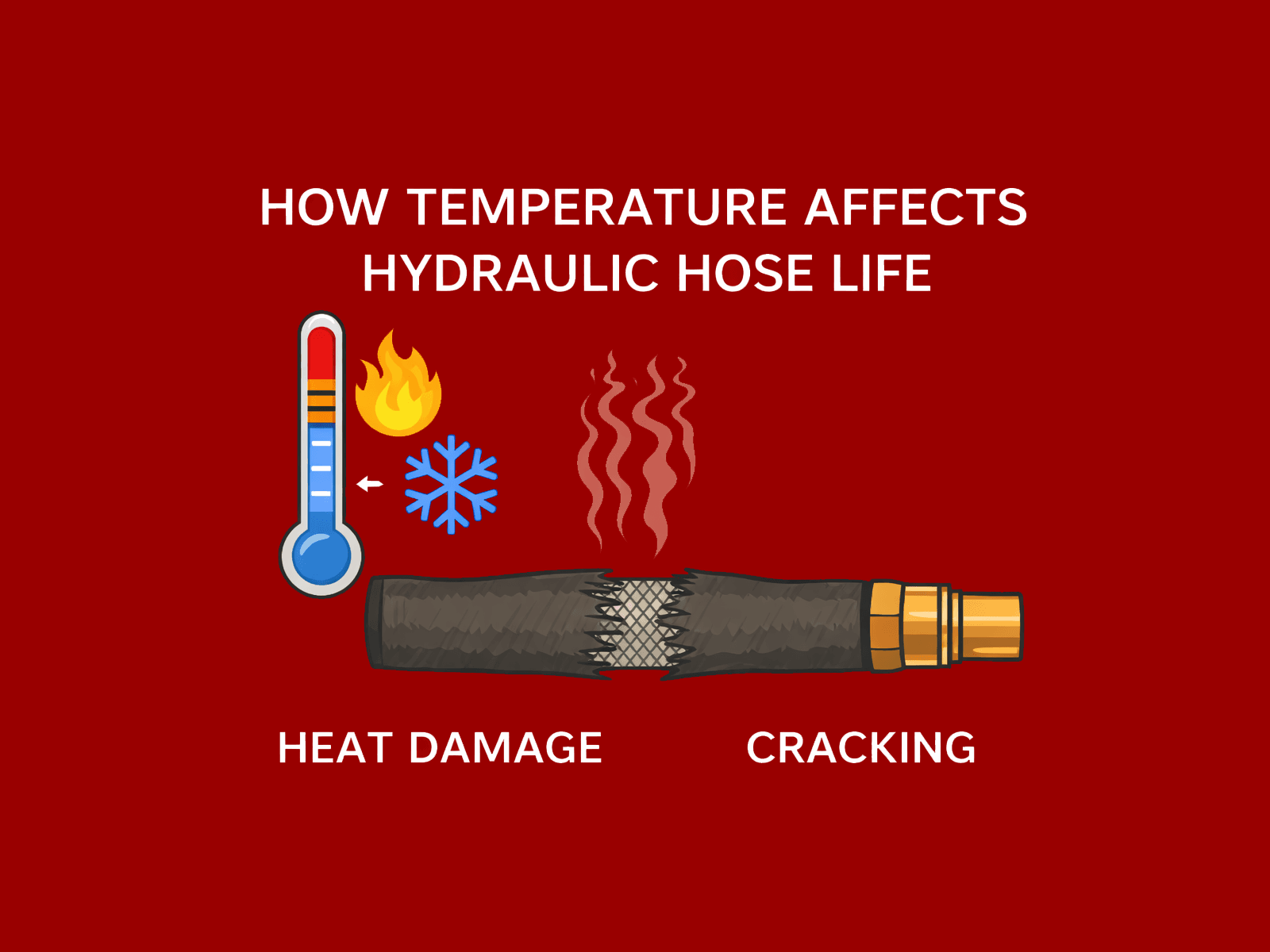
Fluid temperature plays a major role in how long a hydraulic hose will last. More than the temperature itself, rapid swings from very hot to very cold can cause the hose material to expand and contract constantly. Over time, this cycling leads to internal fatigue, cracking, and reduced pressure capacity. These failures often appear without warning, which is why temperature control is considered a core part of hydraulic system design.
To stabilize temperature, many systems use hydraulic oil coolers or heaters to keep the fluid as close as possible to room temperature. A controlled operating range not only protects hoses but also preserves seals, fittings, pump components, and valves. Once hydraulic oil exceeds roughly 180°F, the oil begins to oxidize and break down, thinning out and losing its protective properties. This increases the risk of leaks and accelerates wear on every connected component.
Using high-quality fittings is especially important in systems that run near temperature limits. Titan Fittings offers durable stainless steel options such as JIC fittings, ORB adapters, and NPT connections designed to withstand demanding thermal conditions. Pairing stable fluid temperature with corrosion-resistant fittings helps maximize hose life and keeps your hydraulic system running smoothly and safely. Explore Titan’s full range of hydraulic fittings to build a system engineered for longevity.