How to Spot Corrosion on Hydraulic Adapters
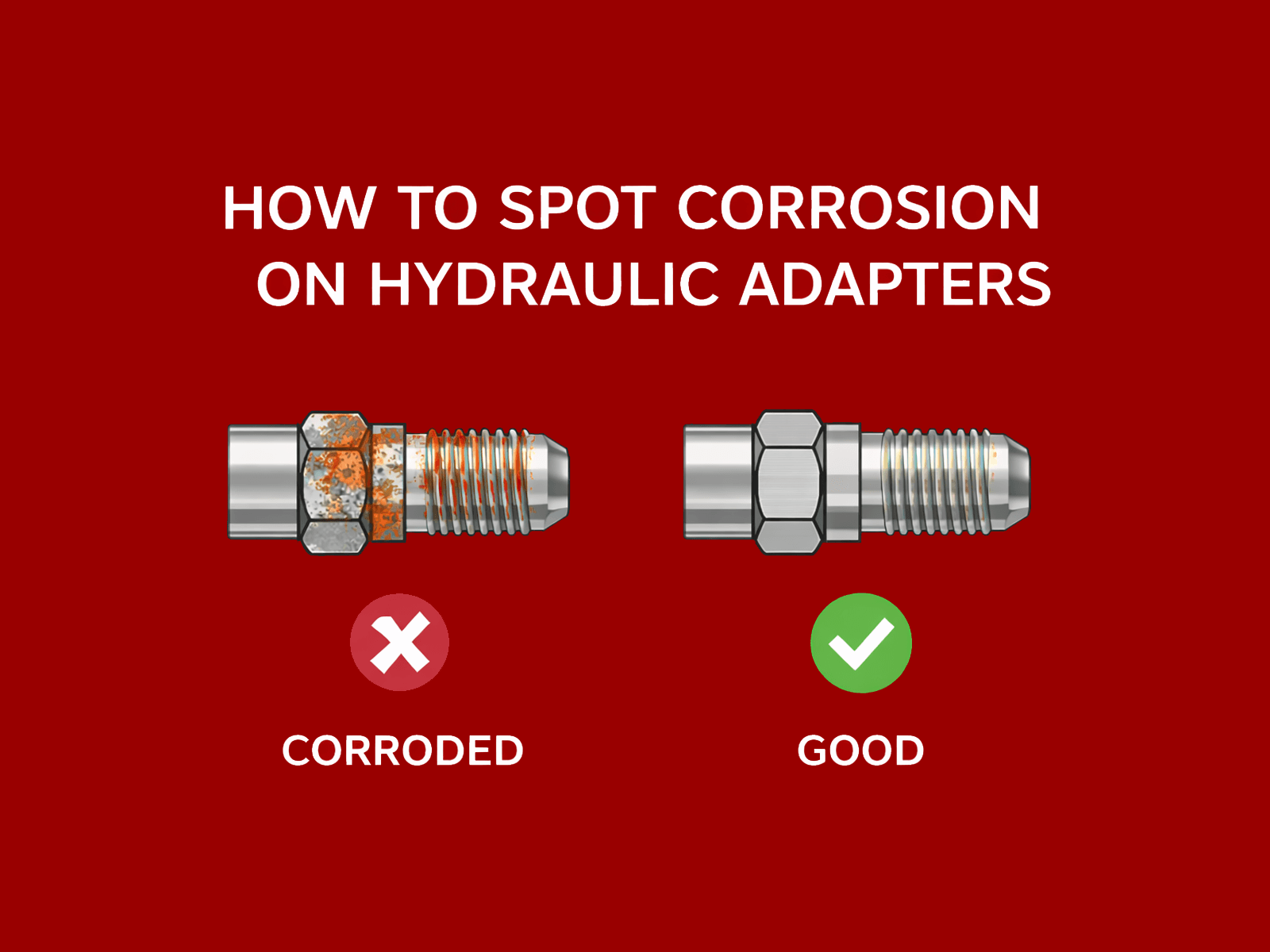
Visually inspecting adapters and fittings is one of the easiest ways to understand how much life they have left before failure. Corrosion usually begins on the surface and becomes more noticeable as oxidation progresses. When an adapter starts to show visible rust, pitting, or discoloration, it is often a sign that the protective layer has worn away and the metal underneath is beginning to weaken. Identifying these early warning signs helps prevent leaks, system downtime, and unexpected equipment failure.
Carbon steel adapters typically have a protective plating, such as zinc or phosphate, that corrodes first. Once this plating begins to break down, the steel beneath becomes vulnerable to moisture and chemical exposure. This process is accelerated in environments with regular water contact or salt exposure. When the plating loses integrity, you will see reddish rust forming around threads, hex surfaces, or any exposed metal. This visual shift is an indicator that the adapter is nearing the end of its service life and should be replaced to maintain system safety.
Titan Fittings offers a full line of corrosion-resistant stainless steel components designed to outperform carbon steel, especially in demanding environments. With same-day shipping, a large nationwide inventory, and industry-trusted 316 stainless steel quality, Titan ensures your equipment stays protected and leak-free. If your carbon steel adapters are showing visible corrosion, upgrading to stainless steel fittings provides long-term reliability and peace of mind. Order today and choose fittings built to last.