Understanding How Thread Tightening Causes Leaks
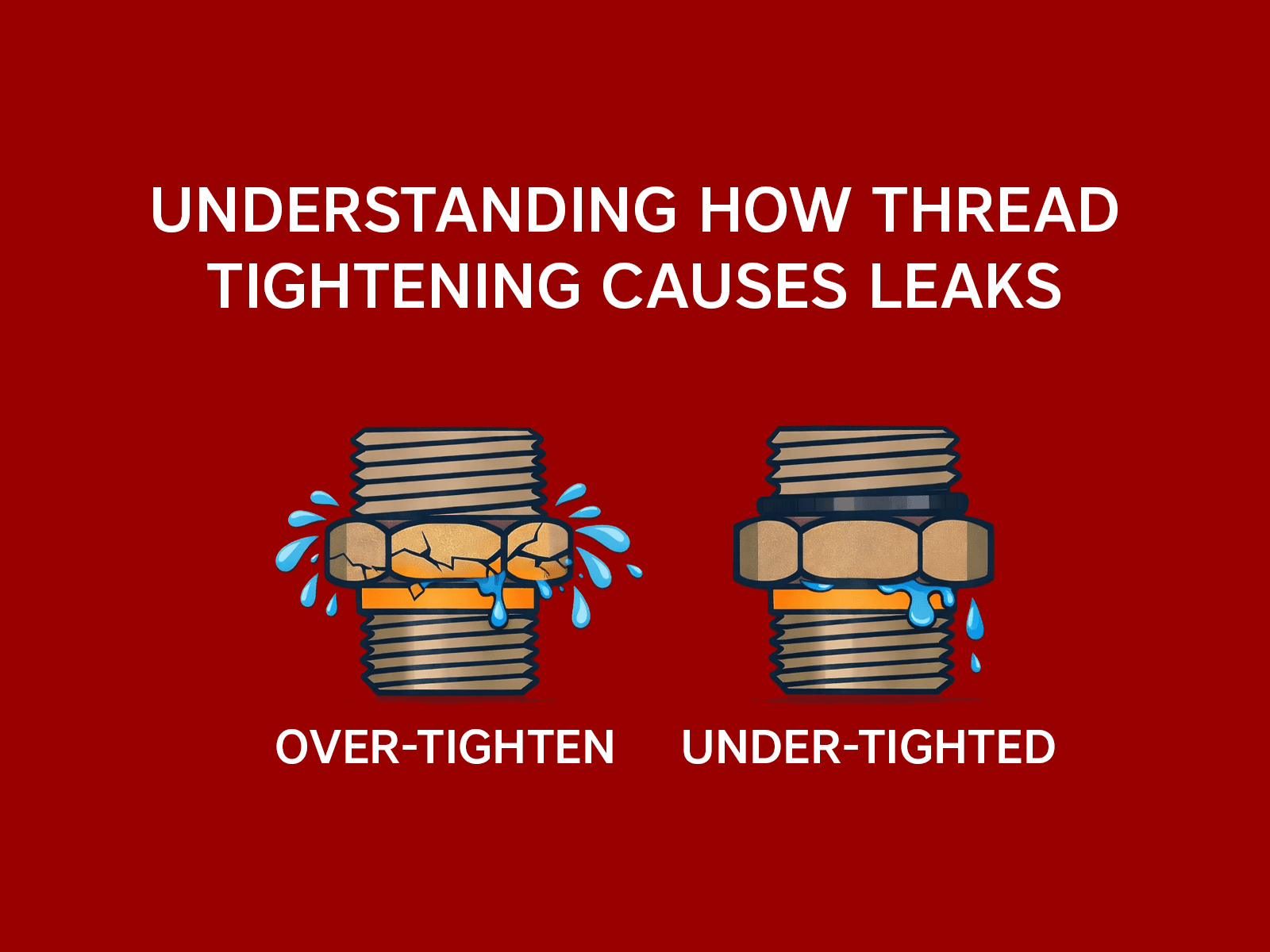
Leaks in hydraulic systems often begin at the fitting, and the two most common causes are over tightening and under tightening. When threads are not tightened enough, small gaps remain that allow fluid to escape once the system is pressurized. When threads are over tightened, the metal can distort, crush, or even crack, creating a permanent path for leaks. This is especially common with softer metals like stainless steel if torque values are not followed.
With MPT/NPT tapered threads, sealing relies on the interference between the male and female taper. Because these threads do not seal on the face, installers typically use thread sealant such as Teflon tape or pipe dope. Applying the proper number of wraps and tightening to specification helps prevent spiral leakage. Titan Fittings offers a full selection of stainless steel NPT/MPT adapters engineered for reliable sealing when installed correctly.
Parallel thread fittings such as ORB and BSPP rely on an O-ring or bonded washer to create the seal, rather than the threads themselves. When leaks occur in these systems, it is often because the O-ring is damaged, missing, or not making proper contact. Replacing the O-ring and ensuring the fitting seats correctly solves most leakage issues. Titan stocks high-performance ORB adapters and BSPP fittings designed for consistent O-ring sealing and long-term reliability. For any thread standard, Titan Fittings provides the components and knowledge to build a leak-free system.