Uses and Considerations for Hose Barb Fittings
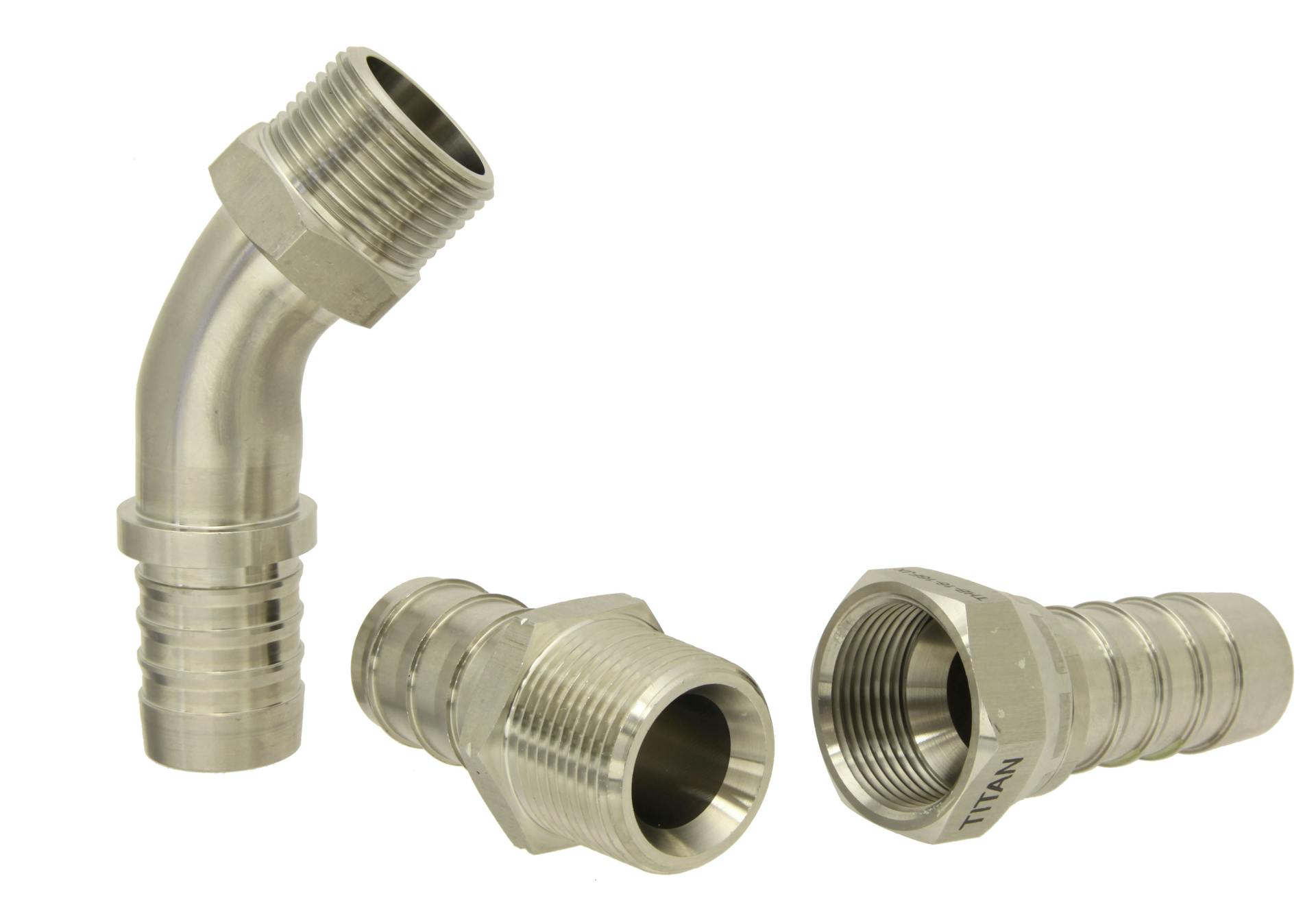
In fluid and gas flow applications hose barb fittings, also called barbed fittings or hose barbed connectors, are very common components. Their wide use owes itself to their reliability, high performance, convenience, and value. Hose barb fittings can be used for a range of applications, including biopharmaceutical processes/systems and garden hose adapters.
Despite their widespread use in a variety of applications, how hose barb fittings work is not well understood, and neither are the mechanisms by which they are sized. Therefore, this article will serve as a brief guide about hose barb fittings, outlining what they are, how they are sized, and how one attaches a hose to a barb fitting.
What is a Hose Barb Fitting?
A hose barb, or barb connector, is that section of the component of a fluid system that is connected to a piece of tubing or hose simply by being inserted into it. In other words, a barbed connection is a connection held in place by continuous radial serrations surrounding a hollow tube. It is through this hollow tube that the fluid or gaseous flow occurs.
Simply put, in a hose barb fitting, the barb holds on to the serrations in the hose/tubing. Therefore the hose used for these components is usually soft-side tubing, such as PVC. Moreover, hose barb fittings are typically used in low-pressure fluid or gas flow control applications (200 psi or lower). The sealing surface, creating by the barb ridges gripping the tubing’s interior wall, can hence be maintained without facing leakages or damages.
How are Hose Barb Fittings Sized?
As with any fluid or gas flow control application, it is important to understand how the components used are sized. Using components of the correct size relative to the other components in your system is crucial to the maintenance and performance of the system.
Hose barbs are sized according to what is known as hose barb depth. Barb depth is a measure of the diameter of the gripping edge of the hose compared to the diameter of the shaft behind it. In other words, barb depth is a ratio of these two measurements.
The match between these two measurements needs to be ideal in order to maintain the flexibility and seal of the tubing. In a well-matched hose barb fitting, the hose will relax around the shaft and form an extremely good seal.
Attaching a Hose to a Barbed Fitting
To attach the tubing on a hose barb, one must push the tubing end up the barb’s slope, past the gripping edge, or edges, of the barb, and then back along the barb’s shaft. The barb has gripping edges that hold onto the internal surface of the tubing. Once fully inserted, the previously expanded hose will relax around and behind the gripping edges, thereby increasing the grip and strengthening the seal.
Final Words
Hose barb fittings, or barbed connectors, are very important components in fluid and gas flow control applications and figure their way into many systems such as aquarium pumps, beverage filters, and more. To ensure a leak-proof seal, one must understand how these hose barb fittings work, how they are attached, and how they are sized.
Frequently Asked Questions
What is a hose barb fitting, and how does it work?
A hose barb fitting is a connector designed to secure flexible tubing or hose using a ridged or serrated stem.
When the hose is pushed over the barb, the ridges grip the inside of the tubing, creating a secure, leak-resistant connection.
Hose barb fittings are commonly used in water distribution, pneumatic systems, agriculture, and low-pressure fluid transfer applications. Depending on the application, a hose clamp may be required for additional security.
How do you choose the correct hose barb fitting size?
Hose barb fittings are generally selected according to the inside diameter (ID) of the hose or tubing.
The barb must be properly matched to the hose dimensions to create a secure connection without damaging the material.
Customers should also consider hose flexibility, wall thickness, operating pressure, and fitting material. Always verify the manufacturer's recommended hose dimensions and fitting specifications before installation.
Do hose barb fittings require hose clamps?
Hose barb fittings do not always require clamps, but clamps are often recommended to improve hose retention and reduce the risk of leakage.
Low-pressure applications may rely on the natural gripping action between the barb and flexible tubing when permitted by the manufacturer.
Applications involving pressure fluctuations, vibration, or mechanical stress may require appropriately sized hose clamps. Always follow the hose and fitting manufacturers' installation recommendations.
What are hose barb fittings commonly used for?
Hose barb fittings are widely used in low-pressure liquid and gas transfer systems.
Common applications include agricultural irrigation, residential water systems, pneumatic equipment, beverage dispensing, aquarium pumps, and industrial fluid transfer.
Their simple design, affordability, and ease of installation make them practical for connecting flexible hoses without specialized assembly equipment.
What is the difference between hose barb fittings and push-lock fittings?
Standard hose barb fittings are generally intended for low- to moderate-pressure applications and should not be assumed suitable for high-pressure hydraulic systems.
Their pressure capability depends on the fitting design, hose material, retention method, and operating temperature.
For demanding hydraulic applications, properly rated crimp fittings or other approved hose-end connections are typically more appropriate. Always verify the complete hose assembly's pressure rating before use.
Primary SEO Keyword: hose barb fitting pressure rating
More questions: Hose Barbs