When Fittings Fail: Examples and Causes of Back Ferrule Failures
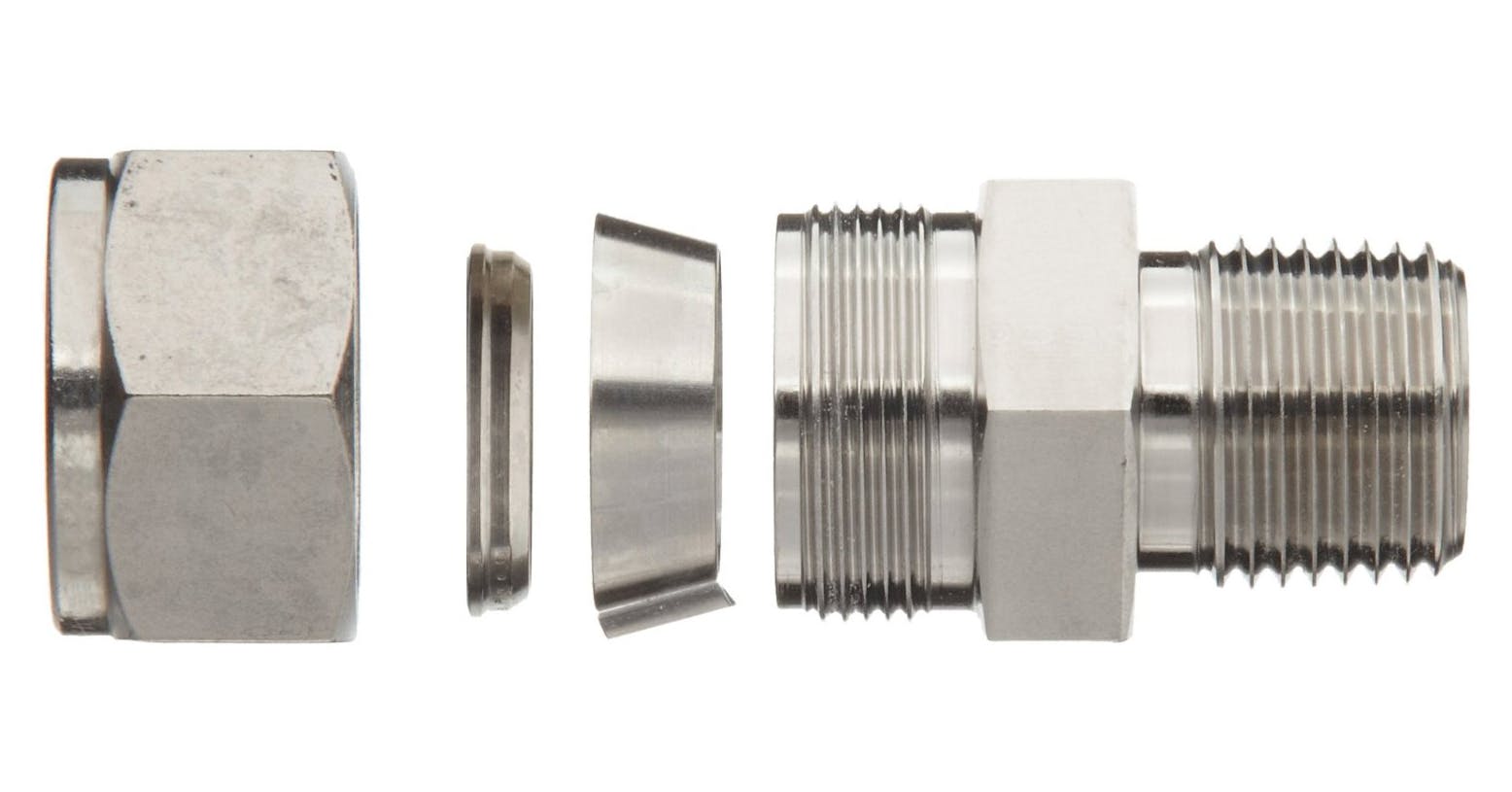
A ferrule is a small component used to seal a compression fitting assembly in piping and tubing-based systems. Such compression fittings are necessary elements in a large variety of tubing-based applications, from plumbing and gas lines to medical devices, chromatography, and inkjet printing.
However, since piping, tubing, and hydraulic systems are entirely manufactured from start to finish, they are always prone to failure. One of the most common sources of failure in a tubing-based system is the fitting or ferrule, the most common reason behind this being corrosion.
While single-ferrule components are also prone to failure, dual or twin ferrule components are much more likely to fail. This article will outline 3 common causes of back ferrule failures so that you know what to look out for next time your hydraulic or piping system shows signs of damage.
Incorrect Installation
Given that dual-ferrule fittings have been the hydraulics and piping industry standard for over 80 years now, they are highly likely to be compatible with most other fittings. The parts that make up the dual-ferrule fitting and its attachments are precision-engineered to create highly secure and leak-proof joints, especially for high pressure or high vibration applications.
That being said, dual ferrule fittings can be rather difficult to install properly. This can be because they are very small and can easily become lost, but it is mostly because there are about 20 different ways to install a dual-ferrule fitting, and only one method is correct. Installing the dual-ferrule incorrectly can lead to back ferrule failure.
Exposure to High Vibration
Part of what makes dual-ferrule fittings so effective is that the back ferrule grips the tubing from the inside and provides a highly secure leak-proof seal. However, for any tubing application that is subject to lots of vibration, it is necessary that the fitting be isolated from the vibration of the tube.
If you cannot meet this requirement in your tubing system, it could easily cause back ferrule failure. It is well known that the maximum destructive force caused by vibration occurs at the joint or support point of the system. Therefore, all the stress will concentrate at this single point in a vibrating system and easily cause back ferrule damage.
Additional Sealing Points
Many people abandon threaded pipes for their tubing system in favor of compression fittings, especially in a system that handles fluid or gas. This has the advantage of eliminating many potential paths for leakages. However, dual-ferrule compression fittings create additional sealing points in the system, introducing new leak paths in the system.
Hence, back ferrule failure could come about as a cause of these additional leak paths in your fluid or gas carrying tubing system.
Conclusion
When working with tube fittings for any piping-based application, an appropriate and reliable seal between the various components is necessary to avoid leakages and subsequent damage.
That being said, back ferrule failures have proven to be the most common cause of damage to a piping-based hydraulic system, with each of the three reasons above contributing to an equal number of such failures.
Associated FAQs: Instrumentation Fittings Ferrules
Frequently Asked Questions
What is a compression fitting and how does it work?
A compression fitting connects tubing or pipe without welding or soldering. It typically consists of a fitting body, compression nut, and one or more ferrules. Tightening the nut compresses the ferrule against the tubing and fitting body, creating a mechanical grip and leak-resistant seal. Compression fittings are commonly used in plumbing, instrumentation, and industrial fluid systems.
What is the difference between single-ferrule and double-ferrule compression fittings?
Single-ferrule fittings use one ferrule to grip and seal the tubing.
Double-ferrule fittings use two separate ferrules: a front ferrule primarily responsible for sealing and a back ferrule that grips the tubing. Double-ferrule designs are commonly selected for demanding instrumentation and high-pressure applications, while single-ferrule designs may be suitable for less demanding systems.
Selection depends on the fitting's specifications, tubing material, pressure, and operating conditions.
What is the purpose of a back ferrule in a compression fitting?
The back ferrule grips the tubing and helps maintain a secure connection in double-ferrule compression fittings. As the fitting is tightened, the back ferrule transfers force to the front ferrule while limiting unwanted torque transfer.
This design promotes uniform compression, reliable tubing retention, and resistance to leakage. Back ferrules are particularly important in stainless steel instrumentation fittings and other demanding fluid systems.
Are compression fittings suitable for high-pressure hydraulic applications?
Certain compression fittings are engineered for high-pressure hydraulic and instrumentation systems, but not all compression fittings are suitable for these applications.
Pressure capability depends on fitting design, tubing material, wall thickness, temperature, and installation quality. High-pressure applications may benefit from properly rated double-ferrule fittings. Always verify the manufacturer's published pressure ratings and tubing compatibility before installation.
Why do compression fittings leak, and how can leaks be prevented?
Compression fittings may leak because of improper installation, damaged ferrules, incompatible tubing, contamination, or insufficient or excessive tightening.
To prevent leaks, use properly matched components, inspect tubing surfaces, ensure correct alignment, and follow the manufacturer's installation instructions.
Avoid overtightening, which can deform components and compromise the seal. Replace damaged components rather than attempting to repair them through additional tightening.
More questions: Compression Fittings
Innovation