When to use Stainless Steel Pipe vs. Hose for Your Assembly
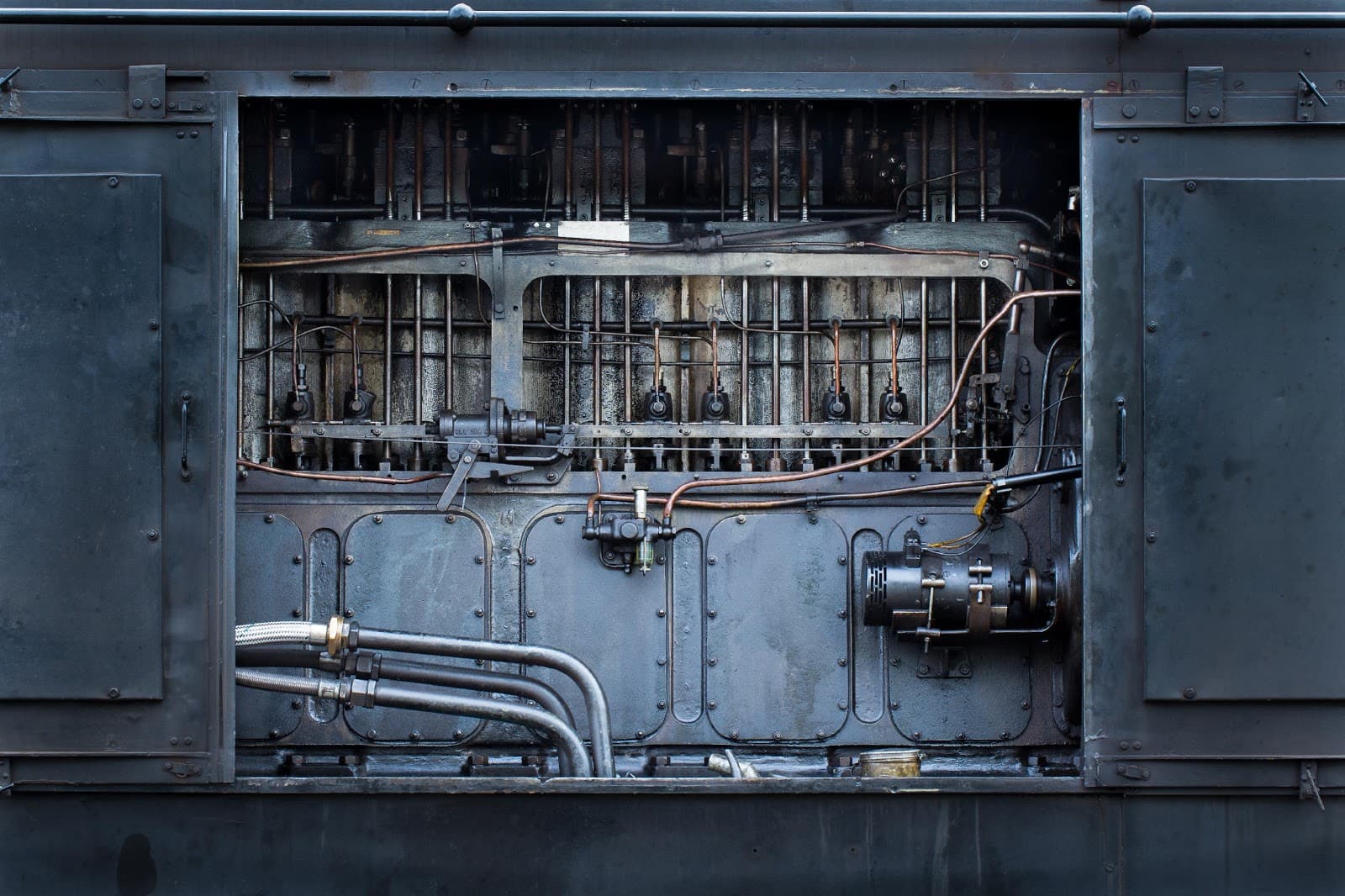
When it comes to fluid conveyance in hydraulic systems, using stainless steel pipes and hydraulic hose assemblies are the most common choices. You’ll see many static and mobile hydraulic systems employing the use of both; however, it is rare to see one being used exclusively. There are a number of factors that go into designing a hydraulic system. Therefore, it becomes necessary to use one over the other. Here we explore the scenarios where stainless steel pipes are more suitable for installation in a hydraulic system over hose assemblies and vice versa.
Longevity
Most industrial systems are designed to remain operational for at least 30 years. Hence, they require components that can withstand the test of time. However, other factors also come into play when choosing the right material for your hydraulic lines. Even after you account for pressure and temperature for your system, vibration, abrasion, and corrosion still remain considerable factors that affect the longevity of a system.
In most cases, stainless steel outshines hydraulic hoses in terms of durability. Owing to its simple construction, resistant build material, and toughness, it can be readily used in small, high-pressure lines instead of hydraulic hoses.
Routing
Hydraulic components like pumps, filters, actuators, and valve bodies, regulate and convert the flow and pressure of the hydraulic fluid, converting them into useful work. Hence, a dense network of hydraulic lines is required to connect them with each other. You may be required to route different lines in a different manner, going through tight spots, leaving room for adjustment, considering expansion and contraction, and making sure no abrasions occur with other parts.
Hydraulic hoses are much more routing-friendly compared to stainless steel pipes. You don’t require special tools to bend them at certain angles; they’re simply flexible enough to connect at different points. However, hydraulic hoses cannot be bent as much as stainless steel pipes. So, for tighter radiuses, stainless steel pipes might be your only option.
Expansion
Hydraulic hoses are made of rubber with multiple layers for reinforcement and protection. When liquid passes through them at high pressure, they tend to expand and exhibit a decrease in length. This is particularly noticeable in lines that need to withstand sudden dips and surges in pressure. Excessive expansion leads to wear and also affects the fluid capacity of the line, impacting the response time. It is for this reason that most hydraulic systems requiring precision and accuracy, like robotic arms, require that stainless steel pipes be used for fluid conveyance. They exhibit extremely low to no expansion at all, making them an ideal component for the job.
Corrosion Resistance and Chemical Compatibility
There is no clear winner in this category as it depends on a number of factors. Whether you’re using stainless steel pipes or hydraulic hoses, you need to check whether the conveyance fluid is compatible with each or not. Additionally, it needs to be compatible with any peripheral components that the fluid comes into contact with, like O-ring inside fittings.
Assuming that both are fluid compatible, corrosion is a problem with stainless steel lines. However, it can be easily protected via a sacrificial coating or even paint. Hydraulic hoses are much more resistant to the external environment, but UV rays may damage their outer layer and degrade it over time.
Frequently Asked Questions
What is the difference between stainless steel tubing and stainless steel pipe?
Stainless steel tubing and pipe differ primarily in how they are measured, specified, and used. Tubing is typically ordered by its exact outside diameter (OD) and wall thickness, making it suitable for precision instrumentation, hydraulic systems, and structural applications. Pipe is generally specified by nominal pipe size (NPS) and schedule, with emphasis on fluid transport and flow capacity. Tubing is available in round, square, and rectangular shapes, while industrial piping is typically round.
What is the difference between welded and seamless stainless steel tubing?
Welded stainless steel tubing is manufactured by forming stainless steel strip into a tube and joining its edges with a longitudinal weld. Seamless tubing is produced from solid steel stock without a longitudinal weld seam. Both types are used in industrial applications, but seamless tubing is often selected for demanding pressure and temperature conditions, while welded tubing can offer cost and availability advantages. Actual pressure capability depends on applicable standards, wall thickness, material grade, and manufacturing quality.
What is the difference between 304 and 316 stainless steel tubing?
Both 304 and 316 stainless steel tubing provide strength, durability, and corrosion resistance. Grade 304 contains chromium and nickel, making it suitable for many general industrial and processing applications. Grade 316 also contains molybdenum, which improves resistance to pitting and crevice corrosion in many chloride-containing environments. For coastal, marine, or certain chemical-processing applications, 316 is often preferred, while 304 may be a more economical choice for less corrosive environments.
What are the advantages of 304L and 316L stainless steel tubing?
Grades 304L and 316L are low-carbon versions of 304 and 316 stainless steel. Their reduced carbon content helps minimize chromium carbide precipitation during welding, reducing the risk of corrosion near welded joints. This makes them useful for welded tubing assemblies, instrumentation systems, and industrial processes where corrosion resistance is important. Grade 316L also offers improved resistance to many chloride-containing environments compared with 304L.
Is seamless stainless steel tubing better for high-pressure applications?
Seamless stainless steel tubing is frequently selected for high-pressure applications because it does not contain a longitudinal weld seam. However, properly manufactured and rated welded tubing can also perform reliably under pressure. The maximum allowable pressure depends on tubing dimensions, material strength, temperature, applicable standards, and fitting compatibility. Customers should verify the manufacturer's published pressure ratings rather than assuming seamless tubing is always stronger than welded tubing.
How do dual-ferrule instrumentation tube fittings work?
Dual-ferrule instrumentation fittings use two ferrules, a front ferrule and a back ferrule, to create a secure mechanical connection between tubing and the fitting body. As the fitting nut is tightened, the front ferrule forms the primary seal while the back ferrule grips the tubing to resist movement and pullout. This design provides reliable connections for properly specified industrial instrumentation, fluid handling, and high-pressure applications.
What is the purpose of the back ferrule in a dual-ferrule tube fitting?
The back ferrule provides mechanical tubing grip and helps maintain connection integrity in a dual-ferrule instrumentation fitting. During installation, it is driven against the tubing to develop a secure hold, helping the fitting resist vibration, pressure loads, and tubing movement. Back ferrules are often engineered with controlled hardness and material properties to provide effective gripping performance. Proper installation and material compatibility are essential for reliable operation.
How do you select the correct stainless steel tubing and fittings for an industrial application?
Selecting stainless steel tubing and fittings requires evaluating operating pressure, temperature, fluid compatibility, corrosion exposure, tubing outside diameter, and wall thickness. Grade 304 is suitable for many general industrial environments, while 316 or 316L may be preferred for more corrosive conditions. Welded and seamless tubing should be evaluated according to applicable pressure ratings and manufacturing standards. For instrumentation connections, properly matched dual-ferrule fittings can provide secure, leak-resistant performance when installed according to manufacturer specifications.
More questions: Tubing