Which Hydraulic Hose Type to Choose for Your Application
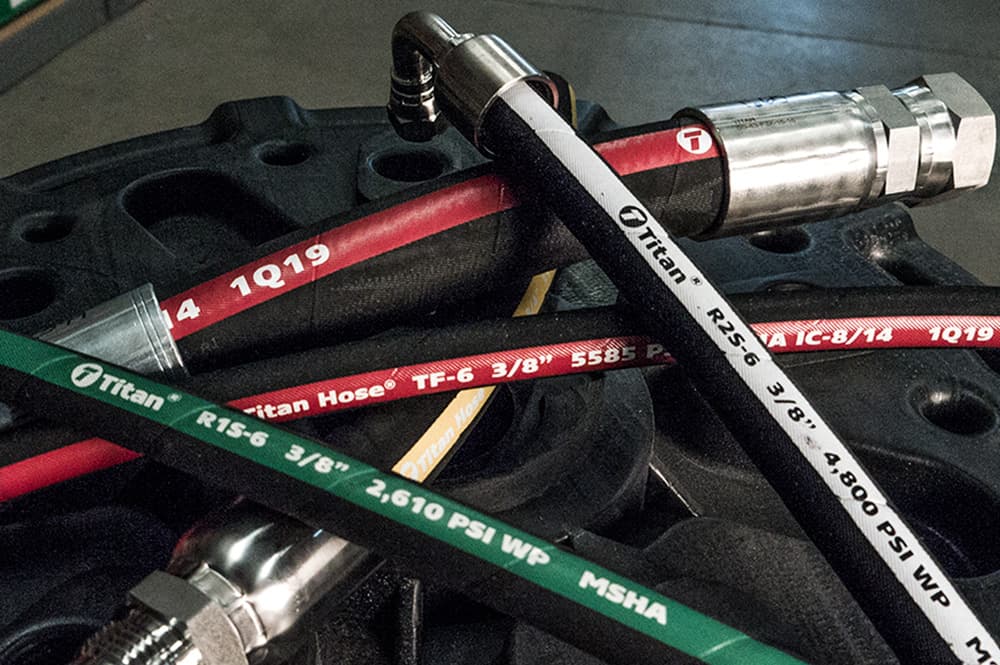
Hydraulic systems are crucial to driving many industrial machinery and processes, requiring hydraulic oil to be forced at high pressure through a network of valves, pumps, and cylinders. Hydraulic hoses are the most essential components of these systems and connect all of these components together for smooth operation. Given the high pressures a hydraulic hose needs to withstand and the often tight space restriction requirements, the application certainly requires the current hose to be specified.
Typically, hydraulic hoses comprise of three parts. An inner tube that carries the hydraulic oil, a middle layer(s) that reinforces the inner tube to withstand pressure, and an outer layer that guards the whole construction. The construction may change depending on the application, so look out for these hose types if you’re wondering which hydraulic hose type to choose for your application.
1. SAE Standard Hoses
SAE standard hydraulic hoses are some of the most commonly used hoses out there. The standard ranges from R1 to R18, each defining the construction of the hydraulic hose. The standard defines what material the inner tubing is made from so that you choose the correct one for fluid compatibility and operating temperature. It also tells you how many layers of reinforcement are there and what material they’re made from to give you an idea of the level of pressure it can withstand.
In addition to these, it highlights the build of the cover material, telling you how resistant it is to the external environment. That being said, here are common hydraulic hoses based on the SAE standard.
2. Low-Pressure Hose
The SAE 100R4 and 100R6 are commonly used for low-pressure applications like return lines, anti-static lines, and vacuum applications. It is for this reason that they are low-pressure hoses with a layer or layers of braided textile fibers. Depending on the pressure, it may require a spiral of steel wire as well. Typically, they are suitable for petroleum and water-based hydraulic fluids and are small enough to be routed easily.
3. Thermoplastic Hydraulic Hose
Thermoplastic refers to the inner tubing material used. What sets it apart from its rubber counterpart is that for the same inner diameter, a thinner inner tubing polymer material is required that is more flexible, durable, easy to construct, and works great in low-temperature conditions. The SAE 100R7, R8, and R18 define the construction of this type of hydraulic hose.
They are commonly used in applications that require medium pressure hydraulic oil like construction equipment, machine tooling, and hydraulic lifts. They even come in non-conductive variants for use in applications requiring electrical isolation.
4. Spiral Steel Wire Hydraulic Hose
Spiral steel wire hydraulic hoses are used for applications that require higher than normal pressures and superior resistance to flexing like heavy-duty machinery used in agriculture, logging, or mining. What makes R13 so suitable for high-pressure applications is the high number (minimum 4) of reinforcement braids used in its construction. Additionally, they are separated by a ply layer running in opposite directions to ensure adhesion between each layer, including the inner tube and the cover.
Note: These are just some of the SAE standard hoses mentioned. Even within the above-mentioned standards, there are multiple subcategories. It all depends on your requirements that determine which hydraulic hose type to choose.
S.T.A.M.P
Choosing the correct hose application won’t be complete without a mention of the popular mnemonic used in the industry – S.T.A.M.P. It conveniently summarizes the factors to look out for when choosing hydraulic hoses for your application.
Size
Size refers to the inner diameter (ID) of a hydraulic hose and determines the flow velocity of the fluid being carried. It is given by the following formula:
Where:
D=Hose ID
Q=Flow in gpm
V=Velocity in feet per second
Low flow in hydraulic fluid dampens the response time of a hydraulic system, whereas a high flowing fluid may damage hydraulic lines.
When searching for the correct hose size, you may encounter the dash number system that indicates the hose size. It normally precedes the part number after a hyphen (-). The number times 1/16 gives you the true value of the hose ID.
Temperature
External working temperature, as well as fluid temperature, need to be considered when selecting a hose. Not all hoses use the same materials for the inner lining and the outer cover. Hence, they have different temperature ratings depending on the rubber or polymer used in their construction. Make sure you select those hydraulic hoses that can withstand the ambient temperature as well as the inner working temperature of the fluid with an additional margin of error for the upper limit. Otherwise, the hydraulic system may get clogged with debris from the inner lining, hoses may burst, and leaks may become more common.
Application
Application refers to all the considerations you need to keep in mind before selecting a hydraulic hose assembly. It’s best to create a checklist to keep track of the different external influences on the hose, like the machinery it is intended to be a part of, what elements it’ll be exposed to, if it has to pass through constrictions, etc.
Media
Media or medium is the official term used to describe the fluid being carried in a hydraulic system. Since a system has multiple hydraulic hoses conveying fluid to different parts, it’s essential that all of them are compatible with the fluid carried. Otherwise, the inner tubing may react with the medium, causing it to erode and clog up the system. Additionally, the outer cover must also be resistant to the element it is subjected to.
Pressure
Hydraulic systems rely on the changes in pressure and velocity to carry out their function. The magnitude of this pressure varies throughout different components of the hydraulic system, each experiencing surges and drops while the system operates. In order to maintain the pressure and withstand spikes due to loading, the hydraulic hoses you select must have a working pressure rating (in PSI) that conveys fluid without bursting and remains intact after transient changes.
Frequently Asked Questions
Does a higher hose pressure rating always mean better performance?
No. A higher pressure rating does not automatically provide better hydraulic system performance.
Higher-rated hoses may be heavier, less flexible, more expensive, or more difficult to route, depending on their construction.
Titan Fittings recommends selecting hoses based on operating pressure, fluid compatibility, temperature, bend radius, flow capacity, and installation requirements rather than pressure rating alone.
How does hydraulic fluid viscosity change under load?
Hydraulic fluid viscosity can change under load as system pressure and operating temperature increase. For many hydraulic oils, increased pressure raises viscosity, while higher temperatures generally lower it.
The extent of these changes depends on the fluid formulation and operating conditions.
At Titan Fittings, we recommend evaluating viscosity across the complete operating range to help maintain reliable flow, lubrication, and hydraulic system efficiency.
Does hydraulic pressure increase fluid viscosity?
Yes. The viscosity of many hydraulic oils increases as pressure rises due to pressure-dependent changes in fluid behavior.
However, the magnitude of this effect depends on the fluid formulation, temperature, and pressure range.
Titan Fittings recommends consulting fluid manufacturer specifications when evaluating viscosity changes in high-pressure hydraulic applications.
What is the difference between pressure-induced and temperature-induced viscosity changes?
Pressure-induced viscosity changes occur when fluid resistance to flow changes under increased pressure. For many hydraulic oils, higher pressure increases viscosity.
Temperature-induced changes result from heating or cooling the fluid. Higher temperatures generally reduce liquid viscosity, while lower temperatures increase it.
Titan Fittings recommends considering both effects when evaluating hydraulic system performance, component compatibility, and lubrication requirements.
How does shear rate affect hydraulic fluid viscosity?
Shear rate describes how quickly adjacent layers of fluid move relative to each other.
Most conventional hydraulic oils behave approximately as Newtonian fluids under normal operating conditions, meaning their viscosity is relatively independent of shear rate at a fixed temperature and pressure.
However, some fluids and additive formulations can exhibit shear-dependent behavior.
Titan Fittings recommends reviewing fluid specifications when designing systems that operate under unusual shear conditions.
Why is viscosity important for hydraulic system efficiency?
Viscosity affects fluid resistance, internal leakage, lubrication, and hydraulic system energy consumption.
Excessively high viscosity can increase flow resistance and pumping losses, while viscosity that is too low can reduce lubrication effectiveness and increase internal leakage.
Titan Fittings recommends selecting hydraulic fluids that maintain the required viscosity range throughout expected operating temperatures and pressures.
How do engineers select hydraulic fluids for varying loads and temperatures?
Engineers select hydraulic fluids by evaluating operating temperature, pressure, load cycles, viscosity grade, viscosity index, fluid compatibility, and equipment manufacturer requirements.
The selected fluid should maintain adequate lubrication while minimizing excessive resistance and performance losses.
Titan Fittings recommends considering fluid compatibility throughout the hydraulic system, including hoses, seals, valves, and stainless steel fittings.
Does hydraulic pressure increase fluid viscosity?
Yes. The viscosity of many hydraulic oils increases as pressure rises due to pressure-dependent changes in fluid behavior.
However, the magnitude of this effect depends on the fluid formulation, temperature, and pressure range.
Titan Fittings recommends consulting fluid manufacturer specifications when evaluating viscosity changes in high-pressure hydraulic applications.
What is the difference between pressure-induced and temperature-induced viscosity changes?
Pressure-induced viscosity changes occur when fluid resistance to flow changes under increased pressure. For many hydraulic oils, higher pressure increases viscosity.
Temperature-induced changes result from heating or cooling the fluid. Higher temperatures generally reduce liquid viscosity, while lower temperatures increase it.
Titan Fittings recommends considering both effects when evaluating hydraulic system performance, component compatibility, and lubrication requirements.
How do engineers select hydraulic fluids for varying loads and temperatures?
Engineers select hydraulic fluids by evaluating operating temperature, pressure, load cycles, viscosity grade, viscosity index, fluid compatibility, and equipment manufacturer requirements.
The selected fluid should maintain adequate lubrication while minimizing excessive resistance and performance losses.
Titan Fittings recommends considering fluid compatibility throughout the hydraulic system, including hoses, seals, valves, and stainless steel fittings.
What is the difference between flow rate and velocity in hydraulic systems?
Flow rate measures the volume of hydraulic fluid moving through a system over time, typically expressed in gallons per minute (GPM).
Velocity measures the speed at which fluid travels through a pipe or hose, typically expressed in feet per second (ft/s).
Flow rate affects actuator speed and system capacity, while fluid velocity influences friction losses, pressure drop, and component sizing.
Titan Fittings recommends designing hydraulic systems to accommodate both requirements.
Why is hydraulic hose diameter important for flow efficiency?
Hydraulic hose diameter determines the available flow area.
For a given flow rate, a smaller internal diameter increases fluid velocity and typically increases pressure losses. A larger diameter can reduce these losses, although it may increase cost, weight, and installation space.
Titan Fittings recommends matching hose diameter to flow requirements, allowable pressure drop, and manufacturer specifications.
What happens when you over-specify hose pressure ratings?
Over-specifying hose pressure ratings means selecting a hose with a pressure capacity substantially greater than the application requires, beyond appropriate safety and design margins.
This can increase material costs, weight, stiffness, and installation complexity without necessarily improving system performance.
Titan Fittings recommends selecting hose assemblies that satisfy actual operating conditions and applicable safety requirements without unnecessary over-engineering.
How do you determine the correct pressure rating for a hydraulic hose?
Determine the maximum operating pressure, including pressure spikes and transient conditions.
Next, evaluate the fluid, temperature, hose construction, connection type, and applicable industry standards.
The complete hose assembly must be rated for the application, including its hose, fittings, and end connections.
Titan Fittings recommends confirming manufacturer-rated working pressure rather than relying on the hose's burst pressure.
What is the difference between hose working pressure and burst pressure?
Working pressure is the maximum pressure at which a hose or hose assembly is rated to operate under specified conditions.
Burst pressure is the pressure at which the hose may rupture during a destructive test.
Burst pressure is not an acceptable continuous operating pressure. The relationship between working and burst pressure depends on the applicable hose standard and required design factor.
Titan Fittings recommends selecting hoses using their rated working pressure and assembly specifications.
More questions: Hydraulic Systems