Why EPDM Should Not Be Used With Oil-Based Fluids
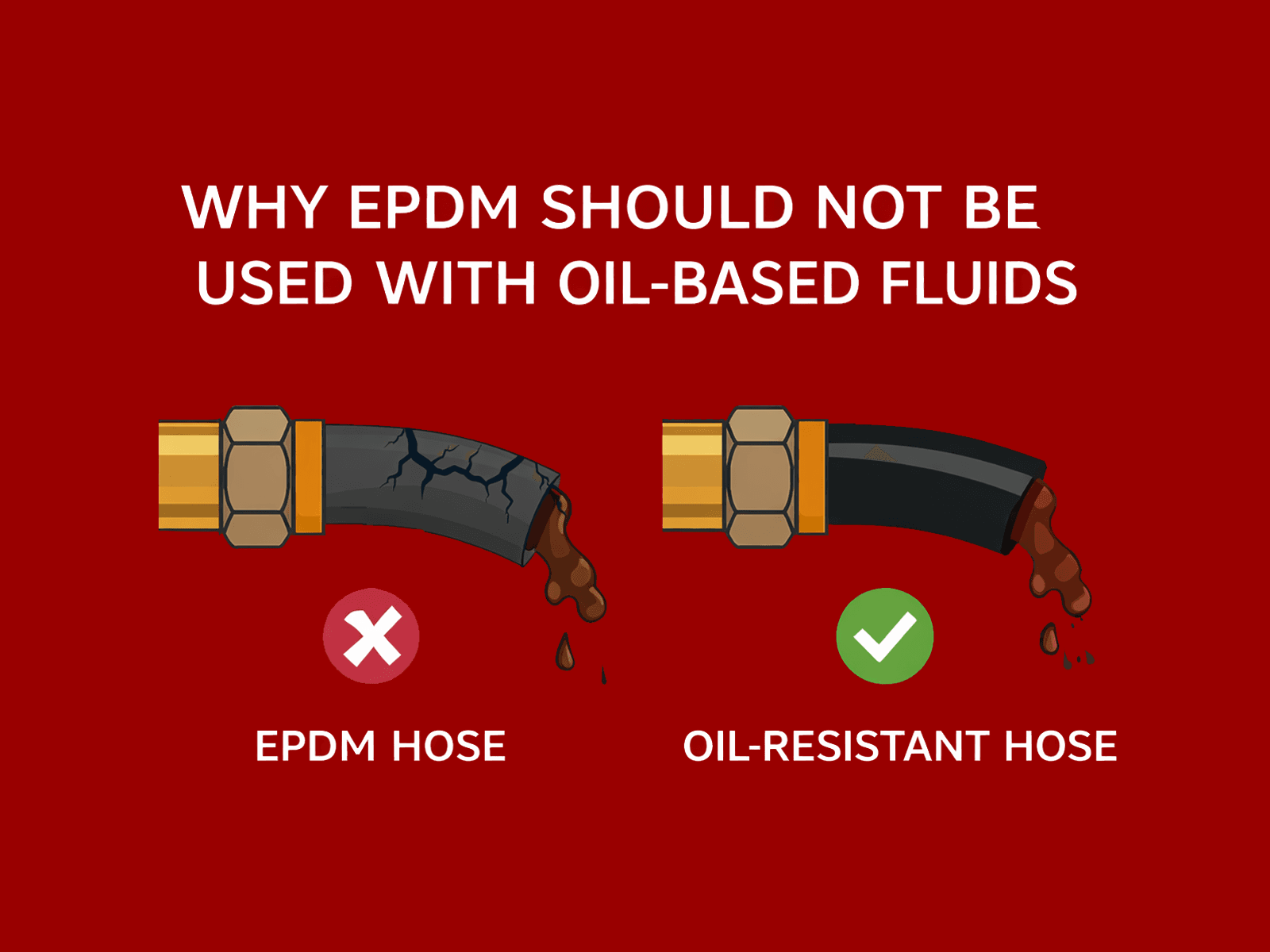
EPDM is a reliable hose material in water-based systems, but it should never be used with oil-based hydraulic fluids. Petroleum oils are highly aggressive toward EPDM rubber and cause it to swell, soften, and lose structural integrity. This deterioration happens quickly once oil comes into contact with the hose, which leads to leaks, blistering, and premature hose failure.
Because of this incompatibility, EPDM is primarily used in water-based coolant systems, glycol mixtures, and low-pressure environmental applications. In these environments, EPDM offers excellent resistance to heat, steam, and weathering. Its ability to handle temperature variation makes it ideal for coolant lines, but the same properties that perform well with water-based fluids become a weakness when exposed to oil.
For hydraulic systems that use oil-based fluids, materials like nitrile (NBR) or HNBR are far better suited. These compounds maintain their structure under oil exposure and deliver long-term durability under pressure. Pairing compatible hose materials with premium fittings ensures leak-free performance. Titan Fittings offers stainless steel JIC adapters, ORB O-ring fittings, and NPT adapters that integrate perfectly with oil-rated hoses. Explore Titan’s full line of hydraulic fittings and adapters to build a system matched to the right hose and fluid.
Frequently Asked Questions
How does temperature affect the lifespan of hydraulic hoses?
Temperature significantly affects hydraulic hose performance and service life. Excessive heat can accelerate deterioration of the inner tube, reduce flexibility, and weaken hose materials.
Repeated temperature fluctuations cause expansion and contraction, increasing the risk of cracking, fatigue, and leaks.
Operating hydraulic hoses within their specified temperature ratings, maintaining proper fluid temperatures, and performing regular inspections can help extend their service life and prevent unexpected failures.
What is the difference between hydraulic hoses and coolant hoses?
Hydraulic hoses are typically designed to transport pressurized hydraulic fluids, including petroleum-based oils, while coolant hoses are engineered to handle water-based fluids, glycol mixtures, and other cooling solutions.
Their inner tube materials, reinforcement, and chemical compatibility requirements may differ. Some rubber compounds suitable for hydraulic oil can deteriorate when exposed to water-based coolants.
Selecting a hose specifically rated for the operating fluid, pressure, and temperature is essential for preventing leaks and premature failure.
What type of hose is best for glycol-based and water-based coolant systems?
Hoses constructed from chemically compatible materials, such as appropriately formulated EPDM or silicone, are commonly used in glycol-based and water-based cooling systems.
EPDM often provides good resistance to water and certain glycol mixtures, while silicone offers flexibility across a broad temperature range.
However, suitability depends on the specific coolant formulation, operating pressure, temperature, and hose construction. Always verify the manufacturer's chemical compatibility specifications before selecting a coolant hose.
Why are flexible hose connections important in data center liquid cooling systems?
Flexible hose connections accommodate misalignment, thermal expansion, and vibration between cooling headers and server racks.
Unlike rigid piping, flexible hoses allow movement without transferring excessive mechanical stress to fittings, valves, and connections.
They also simplify installation and maintenance in confined rack spaces. Properly designed flexible hose assemblies help reduce the risk of fatigue, leaks, and connection damage while supporting reliable coolant circulation in liquid-cooled data centers.
How do you prevent leaks and premature failure in hydraulic and coolant hoses?
Preventing hose failure begins with selecting materials compatible with the operating fluid, pressure, and temperature. Proper installation is equally important, including maintaining the manufacturer's minimum bend radius, avoiding twisting, supporting hose assemblies, and preventing abrasion against surrounding equipment.
Regular inspections can identify cracking, swelling, leaks, and damaged fittings before major failures occur. Using correctly rated fittings and maintaining stable operating temperatures also helps extend hose life.
How do you select the correct flexible hose for a data center rack drop?
Selecting a flexible hose for a data center rack drop requires evaluating coolant type, flow rate, operating pressure, temperature, hose length, and installation geometry.
The hose must accommodate movement between the cooling header and rack without exceeding its minimum bend radius or placing excessive stress on end fittings. Material compatibility with deionized water, glycol blends, or other approved coolants is essential.
Properly matched stainless steel fittings and secure hose support can further improve connection reliability and reduce maintenance requirements.
More questions: Hoses