Why JIC Fittings Still Dominate the Hydraulic Industry
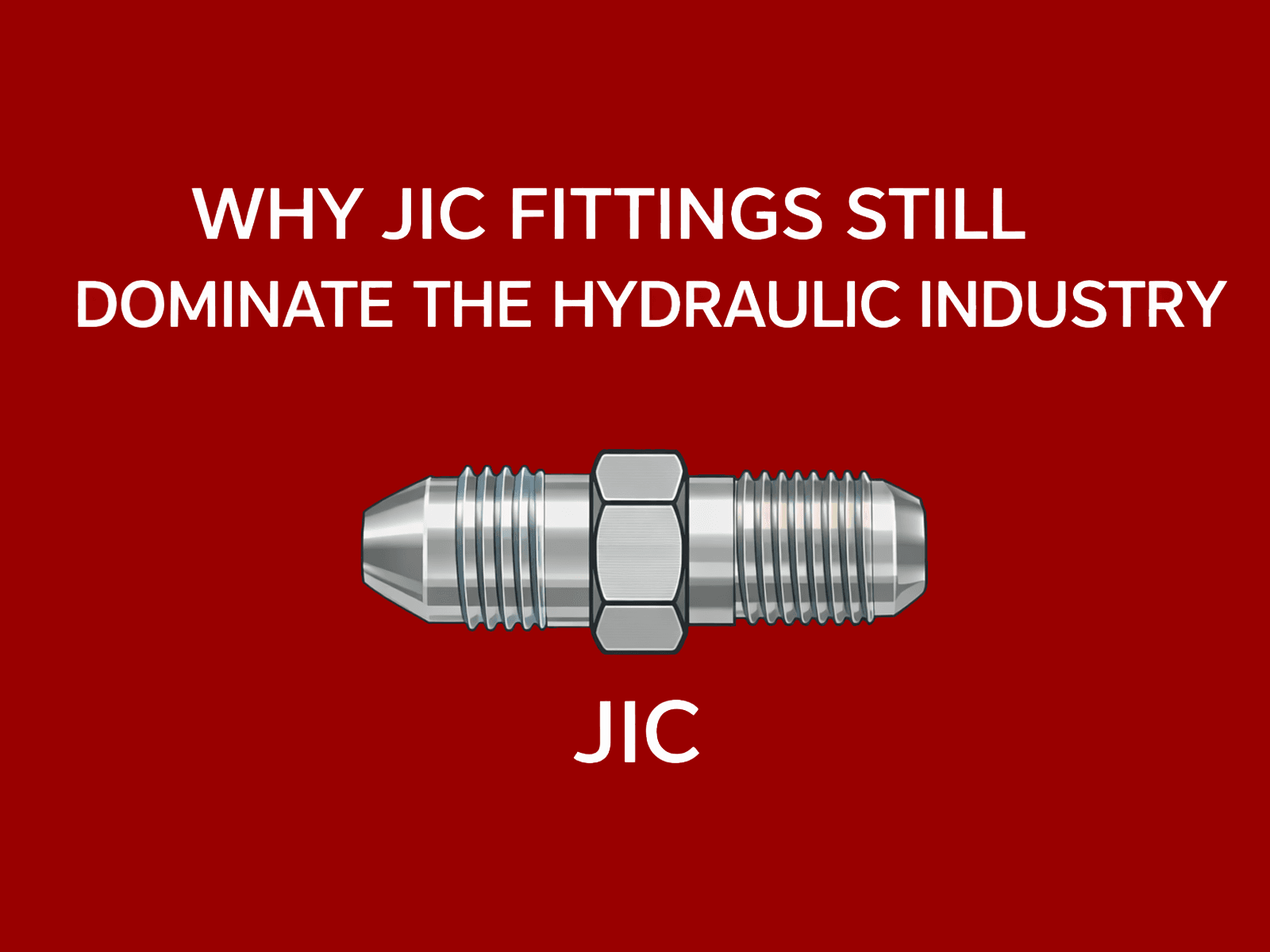
JIC fittings continue to be the most widely used connection style in the hydraulic industry, largely because of decades of legacy equipment built around the 37-degree flare standard. From tractors and skid steers to large industrial machinery, countless systems are designed around JIC threads, which makes it the easiest and most universal choice for replacements, repairs, and new builds. Titan offers a full range of stainless steel JIC adapters like our 90-degree elbows and straight unions, making it simple to maintain or upgrade any hydraulic system with high-quality components. Shop JIC fittings here: https://www.titanfittings.com/...
As hydraulic systems evolve, ORFS (O-Ring Face Seal) fittings have emerged as a powerful alternative. ORFS fittings create a superior mechanical seal that dramatically reduces the risk of leaks under high vibration or high-pressure applications. Many OEMs in construction, agriculture, and heavy equipment have begun shifting to ORFS fittings for their leak-free performance and ease of installation. Titan carries premium stainless ORFS fittings, including ORFS male and ORFS female adapters, perfect for upgrading modern hydraulic systems. Shop ORFS fittings here: https://www.titanfittings.com/...
Even with the performance advantages of ORFS, shifting an entire industry away from JIC is challenging. Technicians are familiar with JIC, inventory systems are built around it, and equipment in the field overwhelmingly uses JIC threading. This means JIC will continue to remain dominant for many years. Whether you need dependable JIC components or want to transition to the more advanced ORFS style, Titan Fittings provides a full line of carbon steel and stainless steel adapters ready to ship fast and keep your machines running. Explore all hydraulic fittings: https://www.titanfittings.com/adapters-and-fittings
Associated FAQs: Pipe Thread Identification
Frequently Asked Questions
Does a higher hose pressure rating always mean better performance?
No. A higher pressure rating does not automatically provide better hydraulic system performance.
Higher-rated hoses may be heavier, less flexible, more expensive, or more difficult to route, depending on their construction.
Titan Fittings recommends selecting hoses based on operating pressure, fluid compatibility, temperature, bend radius, flow capacity, and installation requirements rather than pressure rating alone.
How does hydraulic fluid viscosity change under load?
Hydraulic fluid viscosity can change under load as system pressure and operating temperature increase. For many hydraulic oils, increased pressure raises viscosity, while higher temperatures generally lower it.
The extent of these changes depends on the fluid formulation and operating conditions.
At Titan Fittings, we recommend evaluating viscosity across the complete operating range to help maintain reliable flow, lubrication, and hydraulic system efficiency.
Does hydraulic pressure increase fluid viscosity?
Yes. The viscosity of many hydraulic oils increases as pressure rises due to pressure-dependent changes in fluid behavior.
However, the magnitude of this effect depends on the fluid formulation, temperature, and pressure range.
Titan Fittings recommends consulting fluid manufacturer specifications when evaluating viscosity changes in high-pressure hydraulic applications.
What is the difference between pressure-induced and temperature-induced viscosity changes?
Pressure-induced viscosity changes occur when fluid resistance to flow changes under increased pressure. For many hydraulic oils, higher pressure increases viscosity.
Temperature-induced changes result from heating or cooling the fluid. Higher temperatures generally reduce liquid viscosity, while lower temperatures increase it.
Titan Fittings recommends considering both effects when evaluating hydraulic system performance, component compatibility, and lubrication requirements.
How does shear rate affect hydraulic fluid viscosity?
Shear rate describes how quickly adjacent layers of fluid move relative to each other.
Most conventional hydraulic oils behave approximately as Newtonian fluids under normal operating conditions, meaning their viscosity is relatively independent of shear rate at a fixed temperature and pressure.
However, some fluids and additive formulations can exhibit shear-dependent behavior.
Titan Fittings recommends reviewing fluid specifications when designing systems that operate under unusual shear conditions.
Why is viscosity important for hydraulic system efficiency?
Viscosity affects fluid resistance, internal leakage, lubrication, and hydraulic system energy consumption.
Excessively high viscosity can increase flow resistance and pumping losses, while viscosity that is too low can reduce lubrication effectiveness and increase internal leakage.
Titan Fittings recommends selecting hydraulic fluids that maintain the required viscosity range throughout expected operating temperatures and pressures.
How do engineers select hydraulic fluids for varying loads and temperatures?
Engineers select hydraulic fluids by evaluating operating temperature, pressure, load cycles, viscosity grade, viscosity index, fluid compatibility, and equipment manufacturer requirements.
The selected fluid should maintain adequate lubrication while minimizing excessive resistance and performance losses.
Titan Fittings recommends considering fluid compatibility throughout the hydraulic system, including hoses, seals, valves, and stainless steel fittings.
Does hydraulic pressure increase fluid viscosity?
Yes. The viscosity of many hydraulic oils increases as pressure rises due to pressure-dependent changes in fluid behavior.
However, the magnitude of this effect depends on the fluid formulation, temperature, and pressure range.
Titan Fittings recommends consulting fluid manufacturer specifications when evaluating viscosity changes in high-pressure hydraulic applications.
What is the difference between pressure-induced and temperature-induced viscosity changes?
Pressure-induced viscosity changes occur when fluid resistance to flow changes under increased pressure. For many hydraulic oils, higher pressure increases viscosity.
Temperature-induced changes result from heating or cooling the fluid. Higher temperatures generally reduce liquid viscosity, while lower temperatures increase it.
Titan Fittings recommends considering both effects when evaluating hydraulic system performance, component compatibility, and lubrication requirements.
How do engineers select hydraulic fluids for varying loads and temperatures?
Engineers select hydraulic fluids by evaluating operating temperature, pressure, load cycles, viscosity grade, viscosity index, fluid compatibility, and equipment manufacturer requirements.
The selected fluid should maintain adequate lubrication while minimizing excessive resistance and performance losses.
Titan Fittings recommends considering fluid compatibility throughout the hydraulic system, including hoses, seals, valves, and stainless steel fittings.
What is the difference between flow rate and velocity in hydraulic systems?
Flow rate measures the volume of hydraulic fluid moving through a system over time, typically expressed in gallons per minute (GPM).
Velocity measures the speed at which fluid travels through a pipe or hose, typically expressed in feet per second (ft/s).
Flow rate affects actuator speed and system capacity, while fluid velocity influences friction losses, pressure drop, and component sizing.
Titan Fittings recommends designing hydraulic systems to accommodate both requirements.
Why is hydraulic hose diameter important for flow efficiency?
Hydraulic hose diameter determines the available flow area.
For a given flow rate, a smaller internal diameter increases fluid velocity and typically increases pressure losses. A larger diameter can reduce these losses, although it may increase cost, weight, and installation space.
Titan Fittings recommends matching hose diameter to flow requirements, allowable pressure drop, and manufacturer specifications.
What happens when you over-specify hose pressure ratings?
Over-specifying hose pressure ratings means selecting a hose with a pressure capacity substantially greater than the application requires, beyond appropriate safety and design margins.
This can increase material costs, weight, stiffness, and installation complexity without necessarily improving system performance.
Titan Fittings recommends selecting hose assemblies that satisfy actual operating conditions and applicable safety requirements without unnecessary over-engineering.
How do you determine the correct pressure rating for a hydraulic hose?
Determine the maximum operating pressure, including pressure spikes and transient conditions.
Next, evaluate the fluid, temperature, hose construction, connection type, and applicable industry standards.
The complete hose assembly must be rated for the application, including its hose, fittings, and end connections.
Titan Fittings recommends confirming manufacturer-rated working pressure rather than relying on the hose's burst pressure.
What is the difference between hose working pressure and burst pressure?
Working pressure is the maximum pressure at which a hose or hose assembly is rated to operate under specified conditions.
Burst pressure is the pressure at which the hose may rupture during a destructive test.
Burst pressure is not an acceptable continuous operating pressure. The relationship between working and burst pressure depends on the applicable hose standard and required design factor.
Titan Fittings recommends selecting hoses using their rated working pressure and assembly specifications.
More questions: Hydraulic Systems