Why Stainless Steel Performs So Well in Saltwater Environments
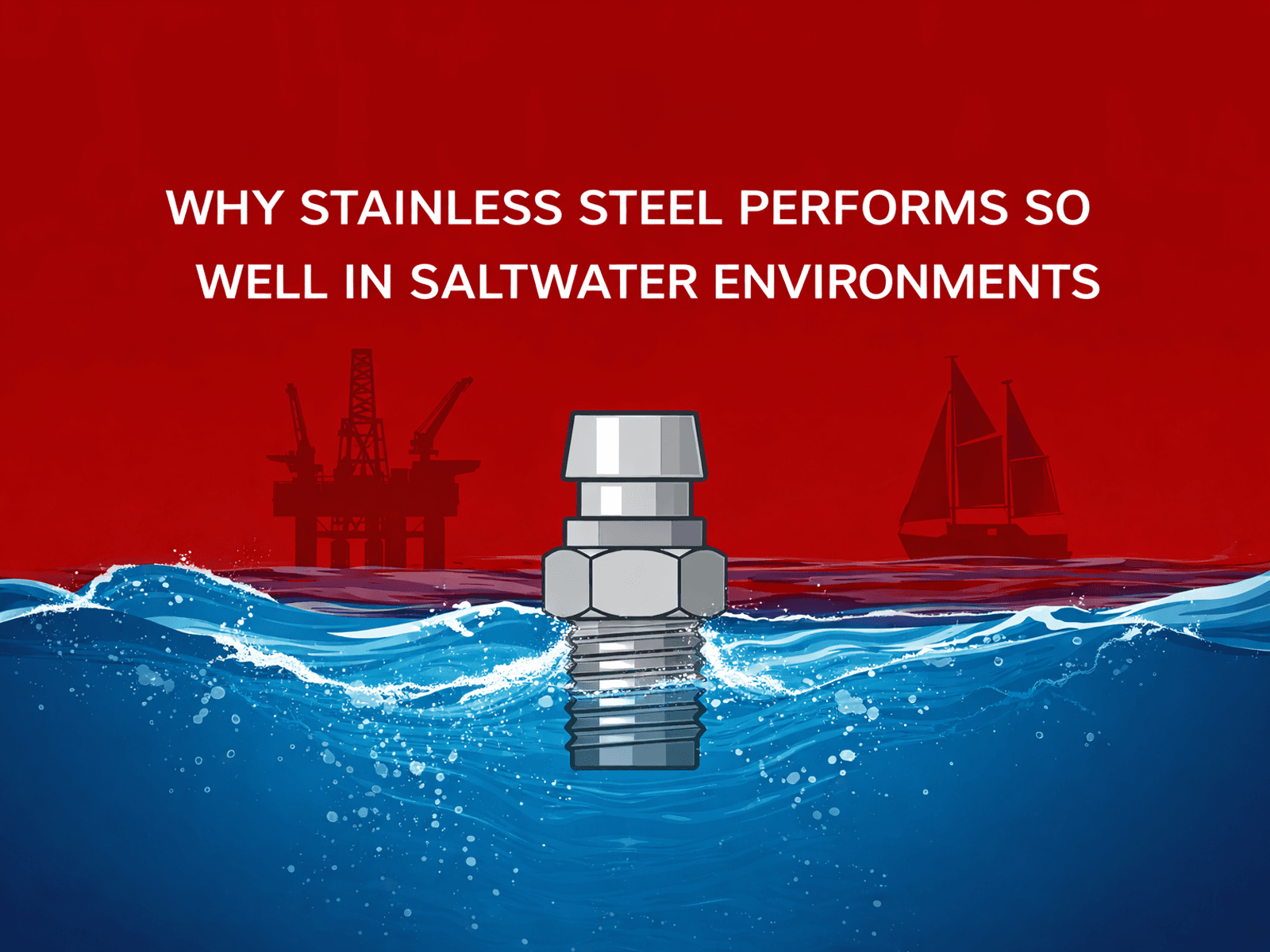
Stainless steel is widely trusted in harsh environments because exposure to salt has minimal impact on its ability to resist corrosion. Unlike carbon steel, stainless is engineered with chromium, which reacts with oxygen to form a protective surface layer. This makes stainless steel an ideal material for equipment that regularly encounters moisture, humidity, or salt spray, since it naturally maintains its structural integrity even under demanding conditions.
Passivation further strengthens stainless steel’s corrosion resistance. During the passivation process, contaminants and free iron are removed from the surface, allowing a uniform oxide layer to form. This passive film dramatically improves protection against chloride exposure, which is why passivated stainless fittings perform exceptionally well in coastal, marine, and industrial environments. The result is a long-lasting material that stands up to saltwater where traditional steel would quickly fail.
Titan Fittings provides high-quality stainless steel components manufactured for long-term durability, reliability, and performance. Whether your equipment operates near the ocean, in chemical environments, or anywhere corrosion is a concern, stainless steel fittings offer peace of mind and reduced maintenance costs. Titan continues to support customers nationwide with fast shipping, a large stainless inventory, and dependable solutions built to thrive in corrosive conditions. Choose stainless fittings that last and keep your operation running strong.
Associated FAQs: Stainless Steel Fittings
Frequently Asked Questions
What causes corrosion in hydraulic fittings and adapters?
Corrosion in hydraulic fittings and adapters occurs when metal reacts with moisture, oxygen, chemicals, or other environmental contaminants. Exposure to saltwater, humidity, harsh chemicals, and incompatible fluids can accelerate deterioration.
Carbon steel fittings are especially susceptible to rust when protective coatings are damaged, while stainless steel provides greater corrosion resistance through its chromium-rich passive oxide layer.
Proper material selection and preventive maintenance help minimize corrosion and extend fitting service life.
How can you identify corrosion on hydraulic fittings before they fail?
Common signs of corrosion include rust, discoloration, pitting, surface flaking, and visible deterioration around threads or sealing surfaces.
Corrosion may also appear as deposits or staining near fitting connections. Routine inspections should focus on exposed metal surfaces, threaded connections, and areas where moisture accumulates.
If corrosion compromises a fitting's structural integrity or sealing surfaces, the component should be replaced with a properly rated alternative.
Are stainless steel fittings more corrosion-resistant than carbon steel fittings?
Stainless steel fittings generally provide greater corrosion resistance than unprotected carbon steel because chromium forms a protective passive oxide layer on the metal surface.
Carbon steel fittings typically rely on plating, coatings, or other protective treatments to resist rust. Stainless steel is often preferred in wet, chemical, or marine environments, while coated carbon steel may be economical in controlled industrial applications.
The best choice depends on exposure conditions, fluid compatibility, and operating requirements.
Why is stainless steel commonly used for fittings in saltwater environments?
Both 304 and 316 stainless steel offer strong corrosion resistance, but 316 stainless steel contains molybdenum, which improves resistance to pitting and crevice corrosion in many chloride-containing environments.
Grade 304 is commonly used in general industrial applications, while 316 is often selected for marine, coastal, chemical processing, and other demanding environments.
Neither grade is completely corrosion-proof, so material selection should consider chloride exposure, temperature, and application-specific conditions.
How can corrosion be prevented in industrial hydraulic systems?
Preventing corrosion begins with selecting fittings and adapters that are compatible with the operating fluid and surrounding environment.
Stainless steel components, properly coated carbon steel, and corrosion-resistant surface treatments can help protect exposed metal.
Additional preventive measures include controlling moisture exposure, maintaining clean hydraulic fluid, inspecting protective coatings, and replacing damaged fittings. Avoiding incompatible metal combinations and minimizing trapped moisture can further reduce corrosion risks.
What is galvanic corrosion, and how can it affect hydraulic fittings?
Galvanic corrosion occurs when two dissimilar metals are electrically connected in the presence of an electrolyte, such as water containing dissolved salts.
The less noble metal may corrode more rapidly, potentially damaging fittings, adapters, and connected equipment.
For example, connecting certain stainless steel and carbon steel components in wet environments can increase corrosion risks for the carbon steel. Using compatible materials, appropriate isolation methods, protective coatings, and proper drainage can help minimize galvanic corrosion.
More questions: Corrosion