Why the Titan Hydraulic Hose is Equivalent to Similar Parker Hydraulic Hoses
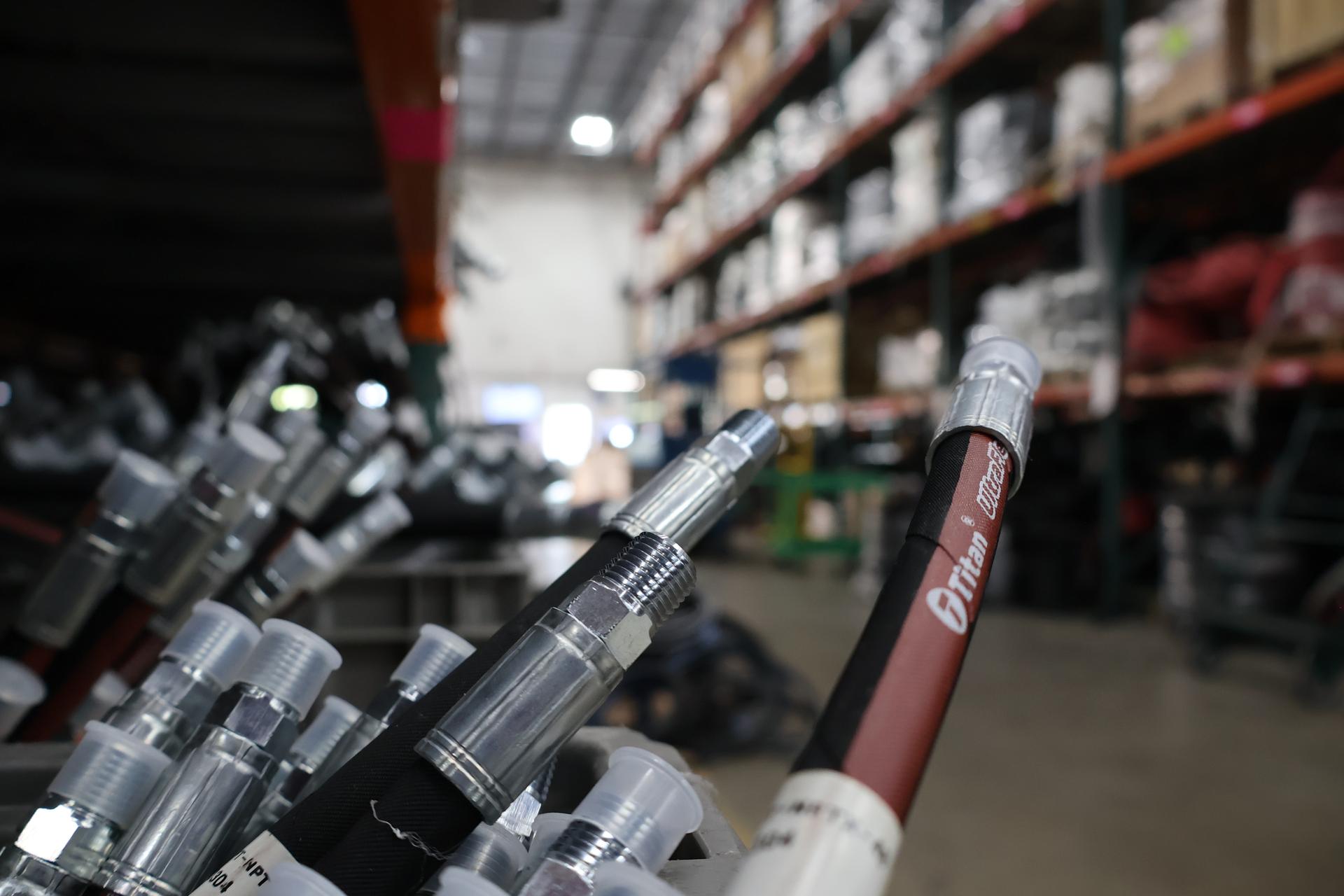
When looking for hydraulic hoses, it is important to note the standards for the hose. You’ll find many standards on hydraulic hoses; however, the SAE J517 is most commonly employed by manufacturers to certify their quality and specifications.
Most manufacturers don’t name their products in a way that reflects the standard. That’s not the case with Titan Hydraulic hoses. Not only do they mention the standard on their product’s name, but also which prominent manufacturer they’re interchangeable with, like Weatherhead, Aeroquip, and Parker. Below, we’ve compiled different types of hydraulic hoses from both Titan and Parker to give you an idea of their similarities.
Wire Braid Hydraulic Hose (up to 3000psi)
Based on the SAE 100R1 standard, Titan’s R1S hydraulic hoses are similar to Parker’s 422 (previously 421) series hydraulic hoses, with a single steel wire braid and synthetic rubber outer. Both allow for medium working pressures up to 3000 psi, with a fluid temperature between -40°F to 212°F.
Wire Braid Hydraulic Hose (up to 6000psi)
If you require higher working pressures of up to 6000 psi, then you’ll have to with Titan’s R2S hydraulic hoses. They have similar specifications to Parker’s 302 (previously 301 and BXX) series hydraulic hoses. Both are based on the SAE 100R2 standard with 2 braids of steel wire as reinforcement and a synthetic rubber outer cover.
Additionally, Titan’s R16S series and Parker’s 431/436 series double steel wire braided hydraulic hoses are based on the SAE 100R16 standard that allows for the same working pressures as the SAE 100R2 hoses but half the bend radius. Ideal for machinery with constricted spaces.
Spiral Steel Wire Hydraulic Hose
If your industry relies on heavy mobile equipment for its operations, then you must require spiral steel wire hoses to handle working pressures and sudden surges. Based on the SAE 10012 and SAE 10013 standards, Titan’s R12 and R13 series hydraulic hoses, respectively, are ideal for this application. Parker also produces similar hoses, like the 721 (SAE 100R12) and 781 (SAE 100R13) series.
Both products have at least 4 spiral steel wire layers for reinforcement with a tough rubber cover for added protection. All R13 hoses work at a high pressure of 5000 psi, while the R12 hoses can range from 2500-4000 psi.
Low-Pressure Hydraulic Hose
To keep your hydraulic system cost-effective, you won’t place high-pressure lines where they aren’t required. Hence, Titan provides low-pressure hydraulic hoses with 2 layers of synthetic textile braided reinforcement. This is similar to Parker’s 601 series hydraulic hoses as both are based on the SAE 100R3 standard. Perfect for low-pressure applications that go up to 1200 psi, like carrying fluid via return lines.
Final Thoughts
Standards allow us to keep track of hydraulic hoses, making engineers’ lives easier during maintenance regimes. If a hose requires replacement, it can be easily communicated to the procurement department by referring to its standard, ensuring that the new part comes with the correct specifications and is compatible with existing machinery.
Frequently Asked Questions
How does temperature affect the lifespan of hydraulic hoses?
Temperature significantly affects hydraulic hose performance and service life. Excessive heat can accelerate deterioration of the inner tube, reduce flexibility, and weaken hose materials.
Repeated temperature fluctuations cause expansion and contraction, increasing the risk of cracking, fatigue, and leaks.
Operating hydraulic hoses within their specified temperature ratings, maintaining proper fluid temperatures, and performing regular inspections can help extend their service life and prevent unexpected failures.
What is the difference between hydraulic hoses and coolant hoses?
Hydraulic hoses are typically designed to transport pressurized hydraulic fluids, including petroleum-based oils, while coolant hoses are engineered to handle water-based fluids, glycol mixtures, and other cooling solutions.
Their inner tube materials, reinforcement, and chemical compatibility requirements may differ. Some rubber compounds suitable for hydraulic oil can deteriorate when exposed to water-based coolants.
Selecting a hose specifically rated for the operating fluid, pressure, and temperature is essential for preventing leaks and premature failure.
What type of hose is best for glycol-based and water-based coolant systems?
Hoses constructed from chemically compatible materials, such as appropriately formulated EPDM or silicone, are commonly used in glycol-based and water-based cooling systems.
EPDM often provides good resistance to water and certain glycol mixtures, while silicone offers flexibility across a broad temperature range.
However, suitability depends on the specific coolant formulation, operating pressure, temperature, and hose construction. Always verify the manufacturer's chemical compatibility specifications before selecting a coolant hose.
Why are flexible hose connections important in data center liquid cooling systems?
Flexible hose connections accommodate misalignment, thermal expansion, and vibration between cooling headers and server racks.
Unlike rigid piping, flexible hoses allow movement without transferring excessive mechanical stress to fittings, valves, and connections.
They also simplify installation and maintenance in confined rack spaces. Properly designed flexible hose assemblies help reduce the risk of fatigue, leaks, and connection damage while supporting reliable coolant circulation in liquid-cooled data centers.
How do you prevent leaks and premature failure in hydraulic and coolant hoses?
Preventing hose failure begins with selecting materials compatible with the operating fluid, pressure, and temperature. Proper installation is equally important, including maintaining the manufacturer's minimum bend radius, avoiding twisting, supporting hose assemblies, and preventing abrasion against surrounding equipment.
Regular inspections can identify cracking, swelling, leaks, and damaged fittings before major failures occur. Using correctly rated fittings and maintaining stable operating temperatures also helps extend hose life.
How do you select the correct flexible hose for a data center rack drop?
Selecting a flexible hose for a data center rack drop requires evaluating coolant type, flow rate, operating pressure, temperature, hose length, and installation geometry.
The hose must accommodate movement between the cooling header and rack without exceeding its minimum bend radius or placing excessive stress on end fittings. Material compatibility with deionized water, glycol blends, or other approved coolants is essential.
Properly matched stainless steel fittings and secure hose support can further improve connection reliability and reduce maintenance requirements.
More questions: Hoses